|
|
 |
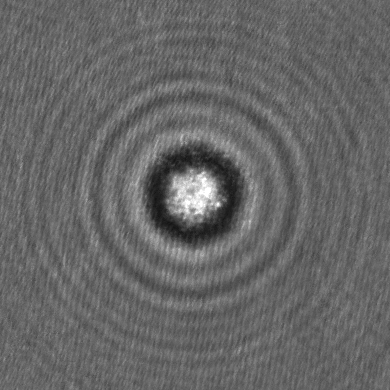
pylorenzmie
Python routines for tracking and characterizing colloidal particles with in-line holographic video microscopy (HVM)
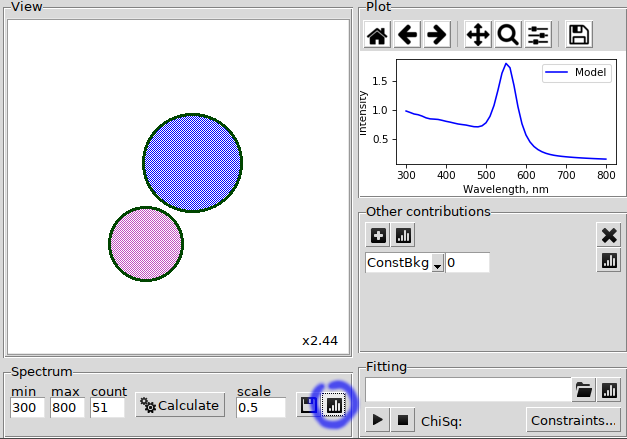
Multi Spheres T-matrix Studio
Python wrapper for multiple sphere T-matrix (MSTM) code and Mie theory to calculate surface plasmon resonance (SPR) spectrum and fit it to experiment.
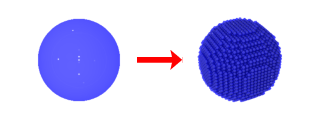
IF-DDA Idiot Friendly-Discrete dipole approximation
IF-DDA is a numerical tool for solving the electromagnetic scattering problem in three dimensions. IF-DDA is based on the DDA (discrete dipole approximation) which is a volume-integral equation method.
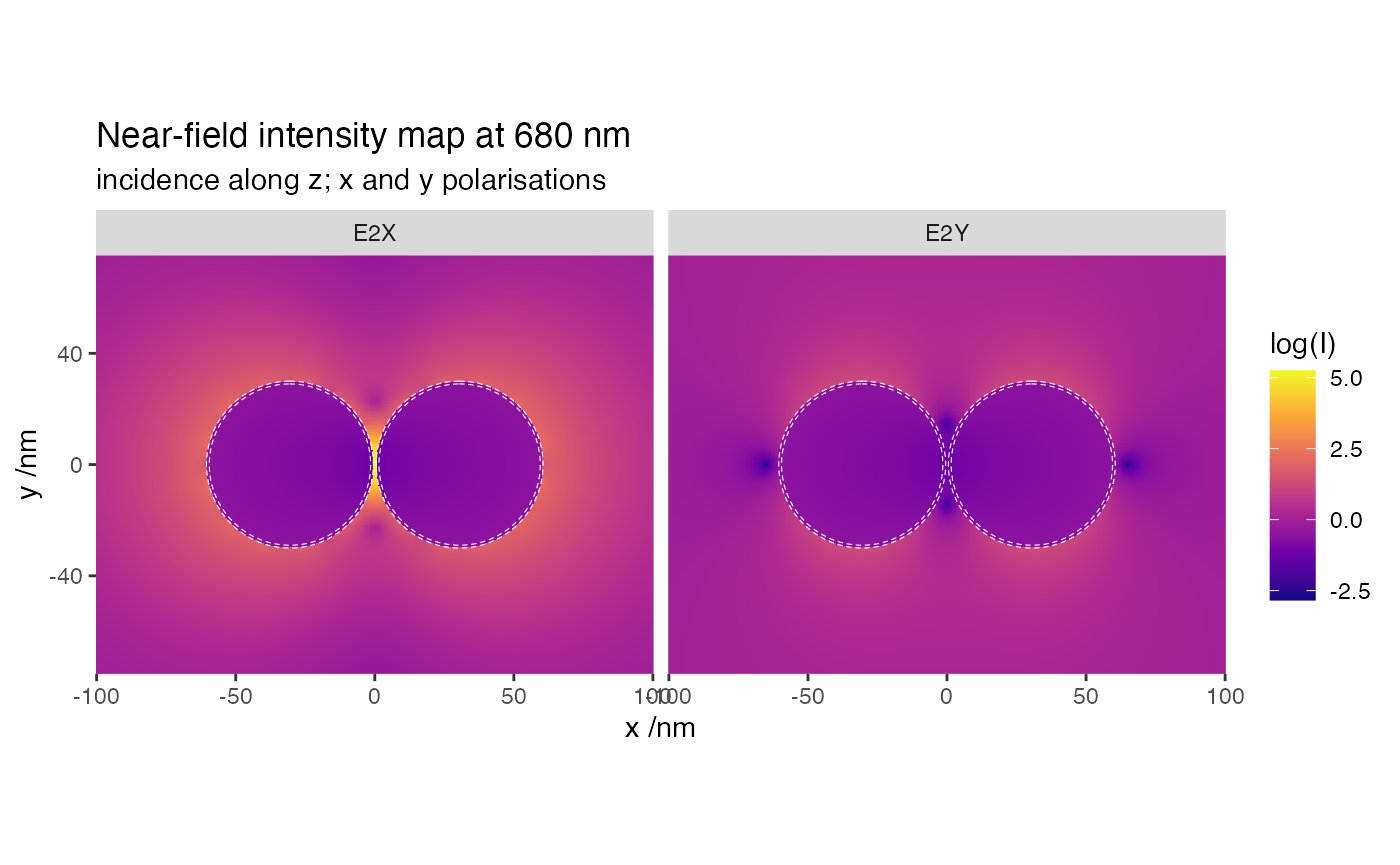
ElectromagneticScattering
A Onelab model for 3D scattering problems in nanophotonics. The T-matrix of an isolated scatterer of arbitrary shape can be computed.

Gaussian beam without approximation
We use the angular spectrum representation to compute exactly the Gaussian beam close to the waist (w0) in the case of highly nonparaxial field (w0<λ). The computation is done in the vectorial case for a polarized Gaussian beam. In the area of the waist, the contribution of the propagating and evanescent waves is discussed. Moreover, the Gaussian wave is developed in terms of series, which permits to get analytical expressions for both propagating and evanescent waves when the observation is close to the waist.
TERMS
T-matrix for Electromagnetic Radiation with Multiple Scatterers — a set of Fortran modules/routines and Python scripts for T-matrix-based calculations and analysis of light scattering by clusters of individual scatterers.
PyDDA
Discrete dipole approximation implementation in Python by Pavel Dmitriev.
Reimplementation of DDA-SI (DDA with planar surface interaction) https://code.google.com/p/dda-si/
GLMTscatt
GLMTscatt by Luiz Felipe Machado Votto GMTL-based electromagnetic field simulator
Luiz Felipe Machado Votto
jlmie
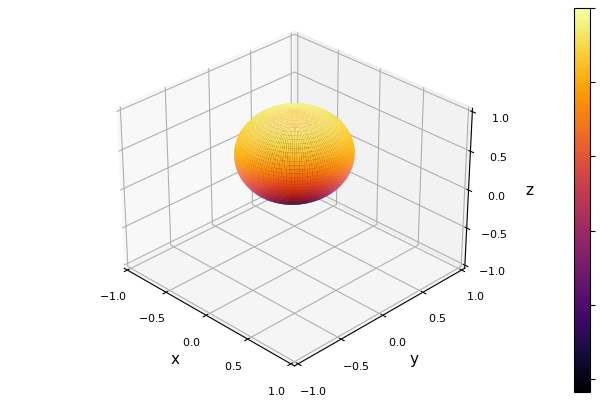
Julia implementation of Mie theory for nanophotonics by Hinamoto, Tatsuki.
ScattPy
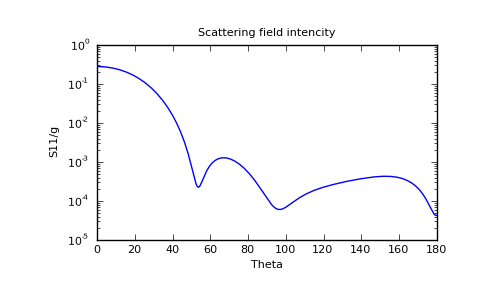
ScattPy is an open source Python package for light scattering simulations. Its goal is to provide an easy-to-use and flexible modern framework for the numerical solving of the diffraction problems with various kinds of particles. ScattPy includes the separation of variables (SVM), extended boundary condition (EBCM) and point matching (PMM) methods.
|
|
|
|