|
|
 |
PyMieSimX by Martin Poinsinet de Sivry-Houle provides a web-based interface for configuring optical sources, scatterers, and detectors, running parameter sweeps, exploring individual particles, visualizing scattering and near-field representations, and exporting results. PyMieSimX is built on top of PyMieSim, which provides the underlying scientific calculations.
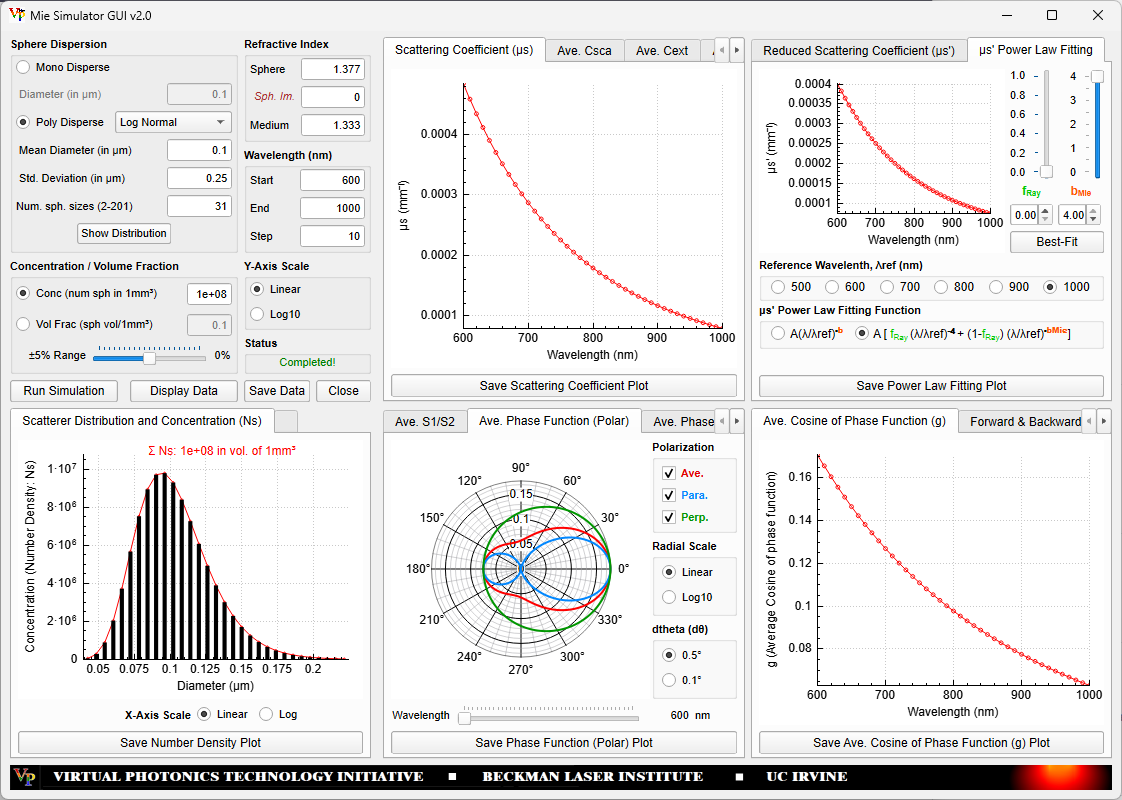
The Mie Simulator GUI is an open-source, user-friendly tool designed to calculate the characteristics of Mie scatterers.
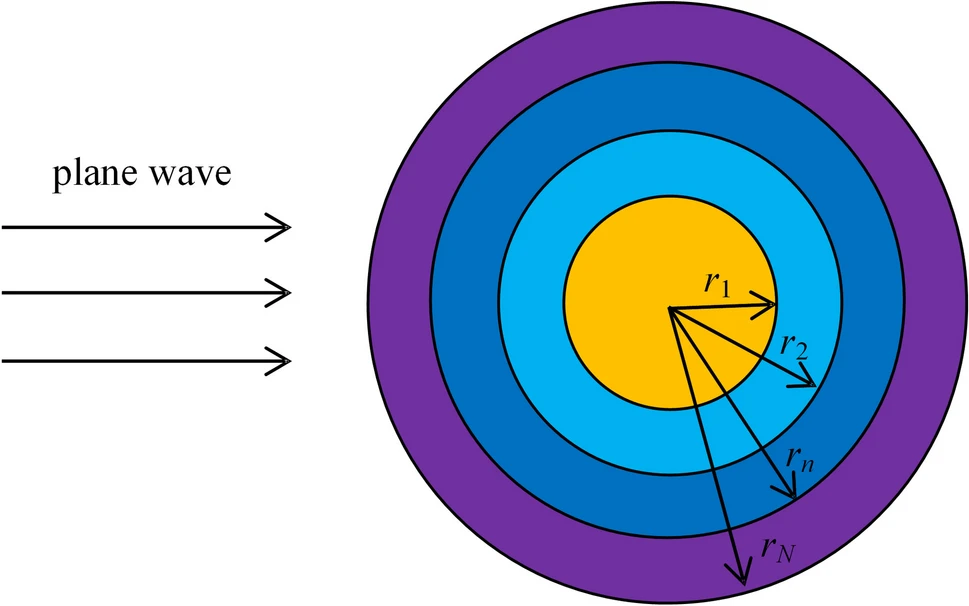
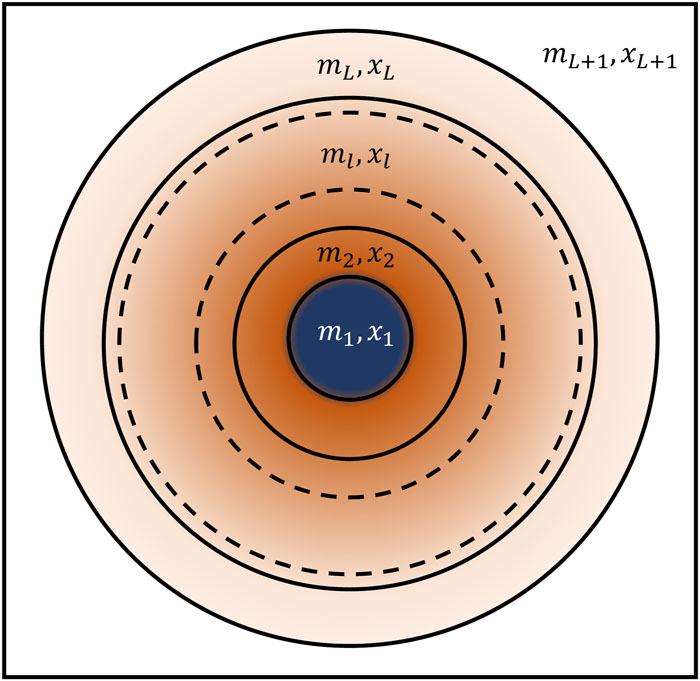
A software called PyMultiLab which can calculate the electromagnetic properties of multilayered spherical particles.
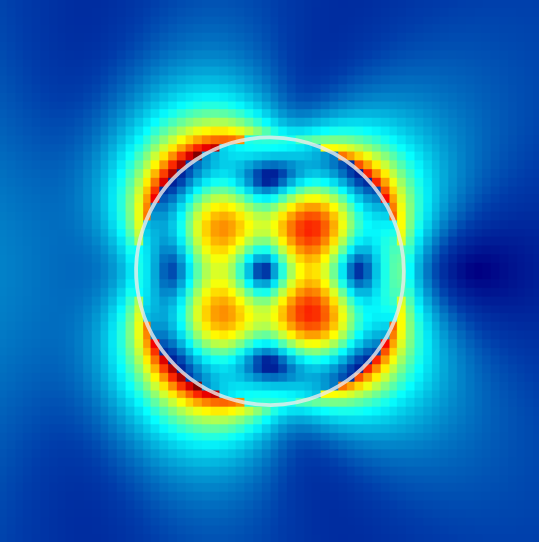
Online nearfield Mie calculator
MATLAB interface to Warren Wiscombe's MIEV0 Fortran77 code such that it is possible to easily use MIEV0 by directly calling it from MATLAB.
[Qext, Qsca, Gqsc, S1, S2, Sforw, Sback, Tforw, Tback, Spike, PMOM] = ...
mlMIEV0(XX, Crefin, Perfct, Mimcut, Anyang, Numang, Xmu, Nmom, Ipolzn, Momdim, Prnt, Verbose);
LX-MIE is a Mie scattering code that calculates:
- Mie efficiencies, cross sections, and asymmetry parameters
- Scattering phase functions for a given set of scattering angles
- Representation of the phase function as a Legendre series
James Lock's Fortran code for the Finely stratified sphere model (Vol. 25, No. 12/December 2008/J. Opt. Soc. Am. A).
- Link (28 Aug 2025) local copy
x
x
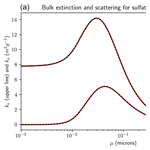
NeuralMie, a neural network Mie scattering emulator that can directly compute the bulk optical properties of a diverse range of aerosol populations and is appropriate for use in atmosphere simulations where aerosol optical properties are parameterized.
A complete Fortran Mie Scattering program for homogeneous and non-homogeneous spherical particles.
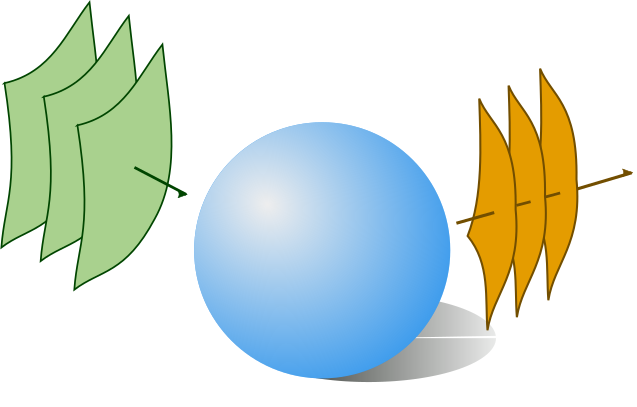
This Julia package provides semi-analytical solutions to the scattering of time harmonic and static electromagnetic fields from spherical objects (amongst others known as Mie solutions or Mie scattering).
|
|
|
|